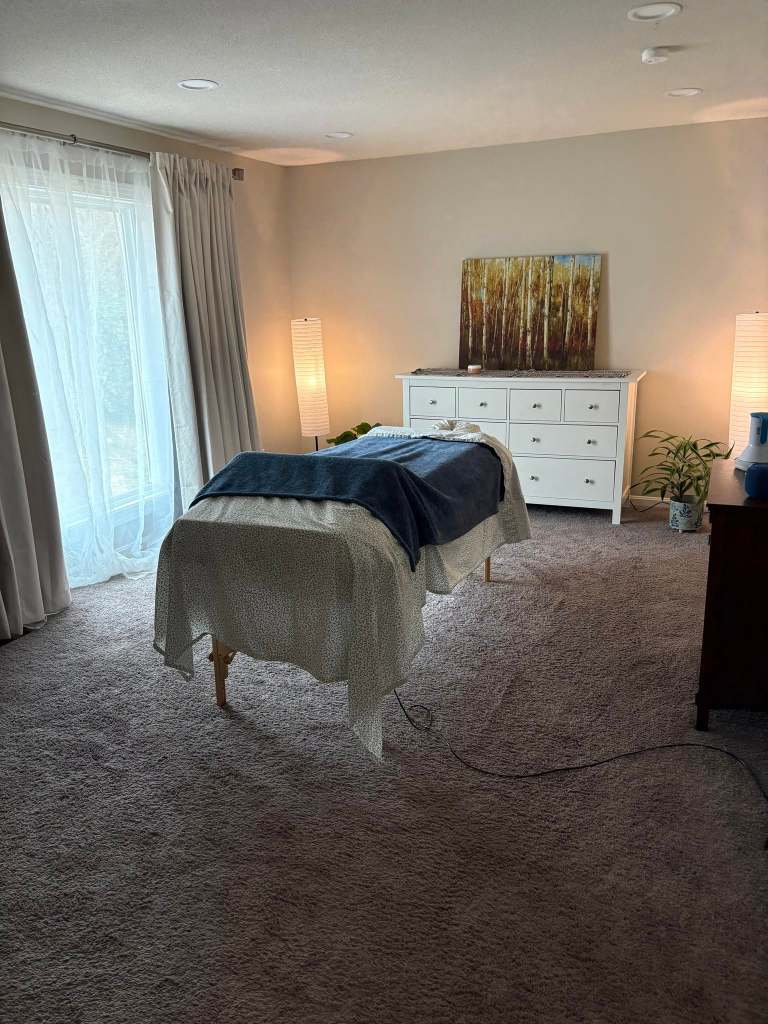
Therapeutic bodywork that changes how you feel, breathe, and move.
My work draws from structural integration, myofascial and orthopedic massage, craniosacral therapy, and movement education. Rather than treating muscles and painful areas as isolated parts, I look at how the tissues and movement patterns of the whole body relate to one another.
Slow, sustained, and specific
Re-ordering restricted fascial and muscle tissues calls for slow, sustained pressure, sometimes affectionately dubbed “muscle melting” or “forced relaxation.” I give your nervous system time to settle while working progressively through layers of muscular and connective-tissue tension.
The goal isn’t simply to make a muscle relax. It is to help the body let go of old patterns of holding and discover a different way of organizing itself.
When an adhesion, scar, restricted fascial layer, or muscle belly releases, the body has an opportunity to experience a new relationship between its tissues. This is where the brain-training aspect of bodywork becomes important: changing the way our muscles and fascial tissues function and support us requires practice and presence with our bodies.
We don’t simply want you to feel different on the table. We want you to be able to move differently in your life.
Structure, movement, the whole body
Structural Integration asks us to look beyond the place that hurts. An old injury can change how you load a joint. A scar can alter how tissue moves. Stress can change how you breathe and hold your muscles. Repetitive movement can gradually make some areas more available and others less available.
Rather than imposing an ideal posture on your body, I work to reduce unnecessary restriction so that your own organization can become more available.
The aim is greater freedom, balance, mobility, coordination, and ease in gravity—not a standardized version of “good posture.”
This may mean working somewhere that doesn’t hurt at all because that tissue is part of the larger pattern contributing to the way you move.
What can change?
When we re-structure soft tissues in this way, we may see relief from chronic pain, increased strength and mobility, better sleep and stress resilience, and an ability to breathe, eat, and move more comfortably.
The changes aren’t only mechanical. Your brain and nervous system are constantly receiving information about how your body is organized. As tissues become more mobile and movement options increase, your awareness and practice help your nervous system learn those new possibilities.
That is why I believe in practice and presence with the body—not just during bodywork, but in everyday movement.
A focus on women’s health
My work with women includes adaptations for pregnancy, postpartum bodies, and the realities of motherhood. A pregnancy bolster, adjustable table that tilts up, and side-lying work allow us to find positions that work for you, while baby nurses or kids crawl around on the floor.
You don’t have to wait for the perfect quiet season of motherhood to take care of your body.
Most commonly treated conditions
Anxiety and stress-induced bodily pain • injury rehabilitation • back pain • neck pain • shoulder and arm range of motion and neuropathy • TMJ • abdominal pain • sciatica • plantar fasciitis • headaches • migraines • scar tissue • impaired mobility • stress and sleep issues • anxiety • digestive issues • post-operative pain
Descriptors for Claire’s bodywork
Deep tissue • orthopedic • specific • myofascial • structural • slow • thorough • stress release • scar-tissue release • trauma-informed • biodynamic • craniosacral • nervous-system regulating • supportive • encouraging • educational • movement • range of motion • stretching • Mayan abdominal massage
Click to read what clients are saying…
“I LOVED my massage with Claire! She could tell immediately the history of my body and focused on the areas that were still needing attention the most. She was also informative to how I can continue my care and gave me helpful suggestions.” – ES
“I am so blessed that I found Claire. She is professional, kind, knowledgeable, listens to my needs, and is an exceptional massage therapist. She has really worked on my body to improve my pain and flexibility. It is truly therapeutic.” – EB
“I have been working with Claire for the past month. CST has been a really important tool in my healing journey with chronic neuropathic pain. I was desperately looking for relief from the constant burning pain in my arm, but not really expecting this to work since so many other treatments have failed. But each week the relief I get during my session is lasting longer and longer, and I am hopeful that this will only continue. Claire is incredibly and humbly gifted in her work and you won’t be disappointed!” – SB

